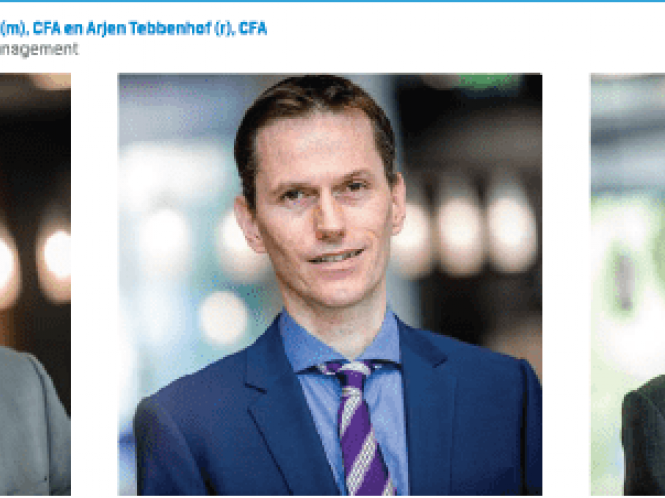
Samenvatting van RBA-scriptie
in VBA Journaal door Sander Rijpma RBA is Performance Analyst bij Caceis Investor ServicesRendementen van SPAC’s en reguliere IPO’s voor een limited partner in private equity tijdens de lock up periode
Rendementen van SPAC’s en reguliere IPO’s voor een limited partner in private equity tijdens de lock up periode
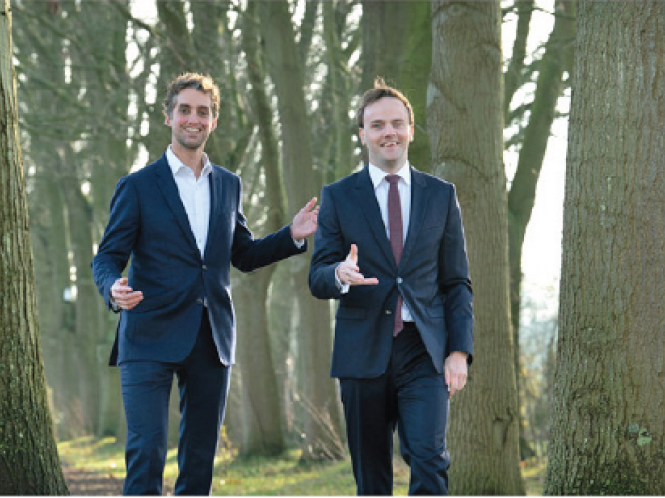
Column in Financial Investigator December 2022, door Jens van Egmond, Head of Europe LDI Client Portfolio Management bij BlackRock
I am very honoured and thankful that the VBA Journal invited me to contribute to its special 150th edition. In this article, I will share my personal perspective on the responsible investing phenomenon. I will first look back at the past two decades in which responsible investing transformed from a niche product to a hyped set of investment solution services. I will then highlight several implicit trade-offs and conflicts of interest that materialize in the many manifestations of responsible investing such as divestment, engagement, and ESG-integration strategies.
I had only just started as editor in chief of VBA Journaal when the credit crisis (‘the global financial crisis’) erupted. This event had a huge impact on both my professional life and my personal life. The investment funds that I oversaw were at risk of collapsing, banks were being held afloat with all sorts of buoyancy aids and the media were asking me to explain all this. My children, who were still very young at the time, wondered whether cash machines would continue to dispense money and whether their grandparents’ pensions were safe. My own portfolio halved in value. Through robust government intervention, the problems were controlled relatively quickly.
In this article we will reflect on the developments in the field of quant investing and argue that the future looks bright. With decades worth of experience at actively navigating multiple investment cycles we have learned that a long-term winning formula can sometimes feel like riding a rollercoaster in the short run. Due to this cyclical nature quant investing is often more a test of character than a test of intelligence and ‘strong hands’ are a necessary condition for success.
Through the various crises in recent decades, it has become clear that the world is fundamentally uncertain – and not stochastically uncertain. With the new insights based on, among other things, complexity theory, it starts to dawn in science and in practice, that we need a greater diversity of models and tools. From Agent Based Modeling and network theory to premortems and scenario thinking. These will enhance financial risk management practices.
Out with the old
Pension funds around the world are increasingly investing in alternative assets, and the most important of these “alternatives” is real estate. We employ the CEM global pension fund database to shed light on the determinants of pension fund allocation to real estate, both over time and in the cross-section. We find that pension funds’ strategic allocation to real estate – net of return effects – is the result of the historical performance of real estate relative to other asset classes, and that pension funds quickly adjust their actual allocation rate to their strategic allocation decisions.
I was editor-in-chief of VBA Journaal from 2001 until 2008. We had just emerged from a period when most of the articles that we received were written by academics. Quite often, this meant that the content of the magazine and the requirements and interests of our readers were not properly aligned. From 2001 onwards it was mainly authors who actually worked in the financial sector that provided us with articles. In the beginning, this took some effort on our part, but the process became easier as time went on – especially because as editors we actively tried to come up with interesting themes and looked for authors to match.
Fast-speaking Koijen talks about the financial markets with great passion. His main focus is why financial markets fluctuate as much as they do. “If on a given day the market rises or falls, you can usually come up with a few possible reasons. But no one really knows. Even when quarterly figures are published, we have a hard time explaining why share prices go up or down. That is one of the crucial questions that my collaborators and I are asking”, says the professor.
According to the World Resources Institute, the energy sector is responsible for approximately 73% of global greenhouse gas emissions. Accordingly, directing capital towards investments that support the transition of the energy sector towards a decarbonised, decentralised, flexible, and consumer-oriented future will be a decisive factor in determining which global warming trajectory we will follow from here on out.
There can be no mistaking the effects that climate change has had on communities around the world in 2021. There are plenty of examples. Heavy rainfall has caused widespread flooding and landslides in The Netherlands, Australia and wide tracts of the US. There have been ferocious wildfires and droughts in California, Greece and Australia, while the hottest-ever temperature in Europe was recorded in August: 48.8°C in Sicily. We believe climate risks are misunderstood and mispriced by participants in real estate markets.
Johan is beleggingsdeskundige en adviseert pensioenfondsen bij BM Fiduciair Beheer. Pensioenfonds SAGA is Johans grootste klant. Tijdens de laatste bestuursvergadering bespreekt het bestuur een investering in een infrastructuurproject waar Johan een analyse voor geschreven heeft. Op basis van grondig, zorgvuldig en behoedzaam onderzoek van alle relevante kenmerken van de belegging is Johan tot de conclusie gekomen dat dit infrastructuurproject in de context van de totale portefeuille geen meerwaarde heeft voor Pensioenfonds SAGA. Het bestuur besluit toch de investering te doen en het vraagt Johan een analyse te schrijven waaruit blijkt dat dit een geschikte belegging is voor SAGA zodat het besluit goed onderbouwd wordt. Moet Johan aan het verzoek van zijn klant gehoor geven en de positieve analyse schrijven?